Malaysia’s café industry is becoming increasingly competitive. From independent coffee shops to growing beverage chains, businesses are looking for ways to attract customers, manage operating costs and stand out in a crowded market.
While the quality of coffee remains important, technology is becoming another part of the equation. Artificial intelligence (AI), digital marketing and robotics are opening up new ways for café operators to manage their businesses and respond to changing customer demands.
The growing interest in these solutions was highlighted during the Jiwa SME 2026 event in Kedah, where industry representatives discussed how digital technology could support the development of Malaysia’s coffee and café businesses.
AI Is Becoming a Business Tool, Not Just a Trend
For café owners, running a business involves more than preparing drinks and serving customers. They must also manage stock, monitor expenses, plan staff schedules and understand what customers want.
AI can help make some of these tasks more manageable by analysing business data and identifying patterns. For example, sales records may help an operator understand which drinks are popular during certain periods, allowing the business to plan inventory more effectively.
Better forecasting can also support purchasing decisions and help reduce unnecessary stock or ingredient waste. In an industry that relies on ingredients such as coffee beans, milk and packaging, managing costs carefully can make a meaningful difference to daily operations.
However, these tools work best when businesses have reliable data and understand how to use the information to make practical decisions.
Digital Marketing Helps Cafés Reach More Customers
A café may offer good coffee and a comfortable atmosphere, but attracting new customers requires visibility. Social media, online advertising and digital platforms have become important channels for businesses to introduce their products and maintain relationships with customers.
Digital marketing tools can help café operators reach audiences beyond their immediate neighbourhood. Businesses can promote new menus, highlight seasonal offers and create content that reflects their brand identity.
AI may also support the planning of promotional content and the analysis of customer engagement. However, technology alone cannot guarantee stronger sales. Businesses still need to understand their target audience, maintain product quality and communicate consistently.
For smaller café operators, the challenge is finding digital solutions that suit their budget and business goals rather than adopting every new tool available.

(From right) Unifi Business Vice President, Dr Mohamad Yusman Ammeran; Robopreneur CEO, Dr Hanafiah Yussof; and Saigon Coffee CEO, Asyraf Kamal during the SME Soul Podcast session at the SME Jelajah Jiwa 2026 Kedah in Alor Setar.
Where Robotics Fits Into the Café Experience
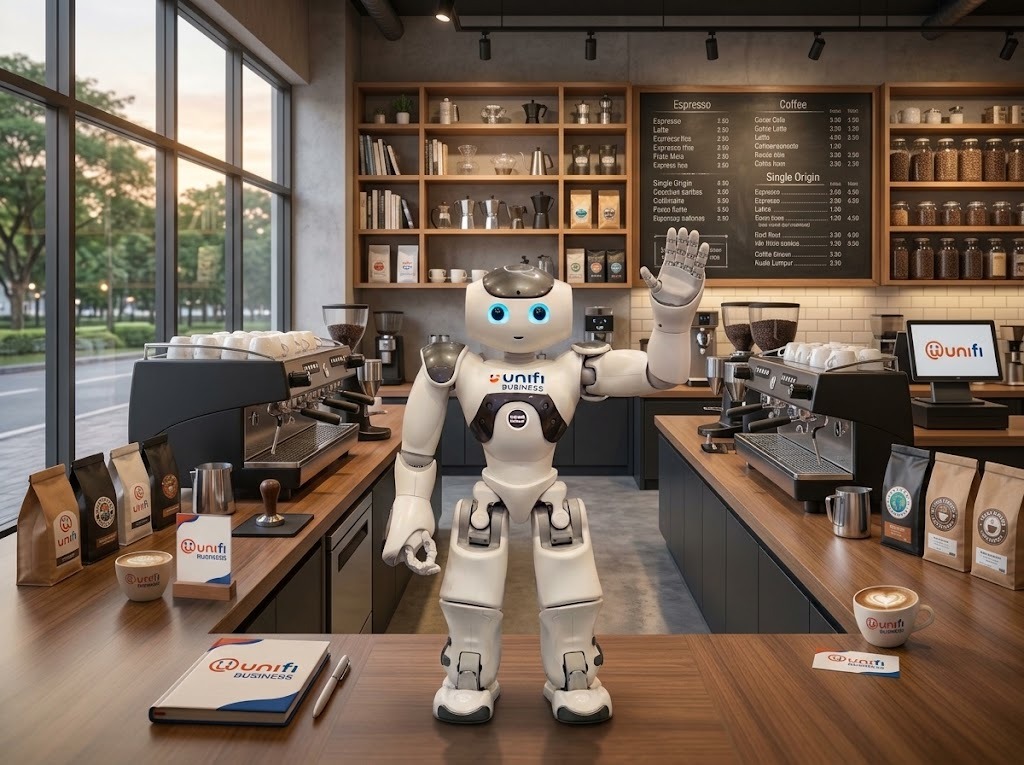
Robotics is another area attracting attention as businesses explore ways to improve productivity and automate selected tasks.
Depending on the technology, robots can assist with repetitive activities and support more consistent workflows. This may be useful for businesses handling high order volumes or looking to streamline particular parts of their operations.
Nevertheless, introducing robotics requires investment, staff training and proper maintenance. Café operators must consider whether the technology addresses a genuine operational need and whether the potential benefits justify the costs.
For many small businesses, improving existing digital systems may be a more practical starting point before investing in advanced automation.
Reliable Connectivity Is Part of the Equation
AI applications, cloud-based systems and digital transactions depend on technology infrastructure that can support daily business activities.
During the Jiwa SME 2026 discussion, Unifi Business highlighted solutions including high-speed fibre connectivity, cloud storage, digital marketing services and a wireless backup option for internet disruptions.
These services illustrate how connectivity can support businesses as they adopt more digital tools. A stable connection is particularly important for operations that depend on cloud-based applications or connected devices.
Still, businesses need to consider other factors, including cybersecurity, data protection and staff capabilities, when moving more of their operations online.
What This Means for Malaysia’s Café Businesses
The growing use of AI and digital technology presents opportunities for Malaysian café operators, but successful adoption does not necessarily mean investing in the most advanced systems.
Businesses can begin with practical steps, such as reviewing sales records, improving inventory tracking, strengthening their social media presence or using digital tools to organise daily operations. As their needs develop, they can assess whether automation or more advanced AI solutions would provide additional value.
The key is to choose technology that solves a real business problem, supports better decisions and fits the company’s resources.
As Malaysia’s coffee culture continues to develop, the businesses that combine quality products with thoughtful management and suitable technology will be better positioned to respond to changing market demands.
The future of the café industry may not depend on technology alone, but on how effectively businesses use it to create a better customer experience and build sustainable growth.