November 11, 2026- Hong Kong is looking to strengthen its position as a gateway for sustainable finance in Asia by improving cooperation between financial institutions, businesses and governments, as regional demand for sustainable investment continues to grow.
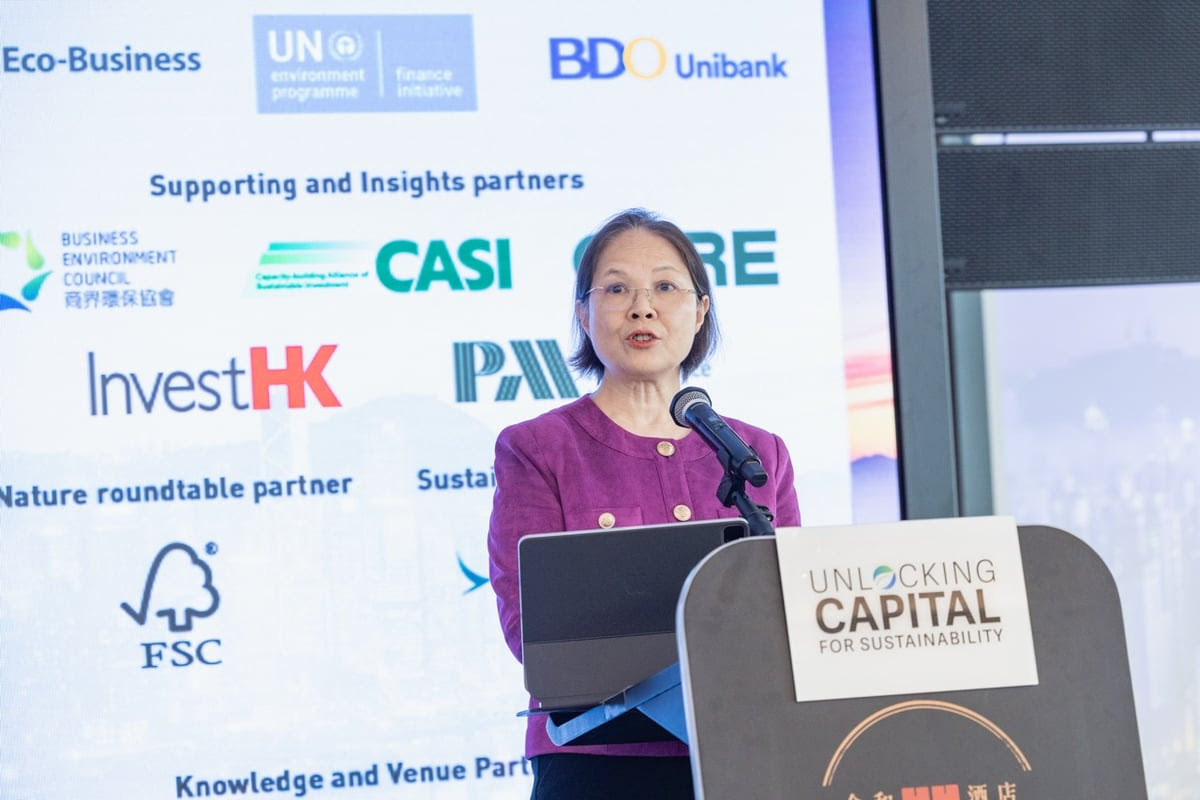
The importance of institutional alignment was highlighted at the 2026 Unlocking Capital for Sustainability summit in Hong Kong, where regional leaders discussed how better coordination of regulations, sustainability standards and investment expectations could help mobilise capital for sustainable development.
Despite slower economic growth and increasing trade barriers affecting climate commitments in several countries, Hong Kong continues to play a significant role in the region’s green finance market.
In 2025, Hong Kong accounted for US$37.7 billion, representing 40 per cent of Asia’s international green and sustainable bond issuances. This made it the region’s largest arranging hub for international green and sustainable bond issuances.
Hong Kong’s Role in Connecting Sustainable Investment
As an international financial centre and a major gateway to mainland China, Hong Kong is positioned to connect investors, businesses, technology providers and international markets.
Diane Wong, Under Secretary for Environment and Ecology, highlighted Hong Kong’s role as a connector between international capital, enterprises, innovation and talent.
She encouraged business and industry leaders to use the city’s financial network to strengthen international green cooperation and support the development of low-carbon technologies and green innovation.
By directing investment towards sustainable solutions, Hong Kong can contribute to building a stronger green finance ecosystem and supporting the region’s transition towards more sustainable economic activities.
Ambassador Harvey Rouse, Head of Office for the European Union (EU) to Hong Kong and Macao, also emphasised the importance of cooperation between Europe and Asia in advancing sustainable development.
He noted that trade and sustainability can support competitiveness, innovation and economic growth, while encouraging more sustainable supply chains and green investment across different economies.
Moving Beyond Financial Intermediation
Another key discussion at the summit was the need to move beyond traditional financial intermediation towards institutional intermediation.
Shouqing Zhu, Senior Policy Adviser for the United Nations Environment Programme Finance Initiative (UNEP FI), explained that Hong Kong could help connect different systems, including technology, manufacturing and capital markets, with international finance and professional services.
He highlighted that different economies operate under varying regulations, sustainability taxonomies and investment expectations. Hong Kong could help bridge these differences, reduce transaction costs and build greater confidence among investors.
This approach is particularly important as businesses and investors increasingly operate across multiple markets with different regulatory and sustainability requirements.
Strengthening Sustainable Finance Capabilities Across Asia
The summit also announced a partnership between Eco-Business and the Capacity-building Alliance of Sustainable Investment (CASI) to strengthen sustainable finance knowledge and capabilities in Singapore and the wider ASEAN region.
The collaboration aims to combine CASI’s expertise and networks in mainland China and Hong Kong with Eco-Business’s media platform, events and training capabilities.
Junice Yeo, Managing Partner and Head of Greater China at Eco-Business, said the partnership would help connect sustainable finance knowledge with practical implementation across the region.
The summit also worked with the Forest Stewardship Council (FSC) and Cathay Pacific to organise dedicated discussions on unlocking investment in forests and supporting the development of a low-carbon economy.
These collaborations reflect the importance of bringing together different stakeholders to address sustainability challenges and encourage investment in solutions that support long-term development.
Regional Discussions on the Future of Sustainable Finance
Organised by Eco-Business in partnership with UNEP FI and other key stakeholders, the 2026 Unlocking Capital for Sustainability summit brought together more than 120 representatives from government, finance and industry.
Under the theme Catalysing Global Capital for the Future, participants discussed various sustainability priorities, including climate technology investment, urban resilience, private wealth and the role of artificial intelligence in the transition towards a more sustainable economy.
The 2026 summit series was also hosted across six Asian markets, including Hong Kong, Jakarta, Kuala Lumpur, Manila, Singapore and Bangkok.
In addition, Eco-Business is partnering with the United Nations Development Programme (UNDP) for the inaugural Unlocking AI for Sustainability summit. The event aims to bring together representatives from government, finance, technology and civil society to discuss how artificial intelligence can support sustainable development across Asia.
As the region faces growing demand for sustainable investment, stronger institutional cooperation, consistent standards and effective partnerships will remain important in directing capital towards long-term environmental and economic priorities.
About Eco-Business
Established in 2009, Eco-Business is an Asia-Pacific business intelligence and advisory platform focused on sustainable development. The organisation produces multimedia content covering major sustainability challenges and solutions, with its work aligned with the 17 United Nations Sustainable Development Goals (SDGs).
Headquartered in Singapore, Eco-Business has a presence in Manila, Kuala Lumpur, Jakarta, Bangkok, Hong Kong, Beijing and London.
For more information, visit www.eco-business.com.
About the UN Environment Programme Finance Initiative (UNEP FI)
The United Nations Environment Programme Finance Initiative brings together banks, insurers and investors to support the development of sustainable global economies.
Established in 1992, UNEP FI works with financial institutions to address environmental, social and governance challenges through sustainability frameworks, practical guidance and industry collaboration.
Its network includes more than 500 banks and insurers, representing assets exceeding US$170 trillion.
For more information, visit www.unepfi.org.